Andes Mountains, Peru (2007, 2008)

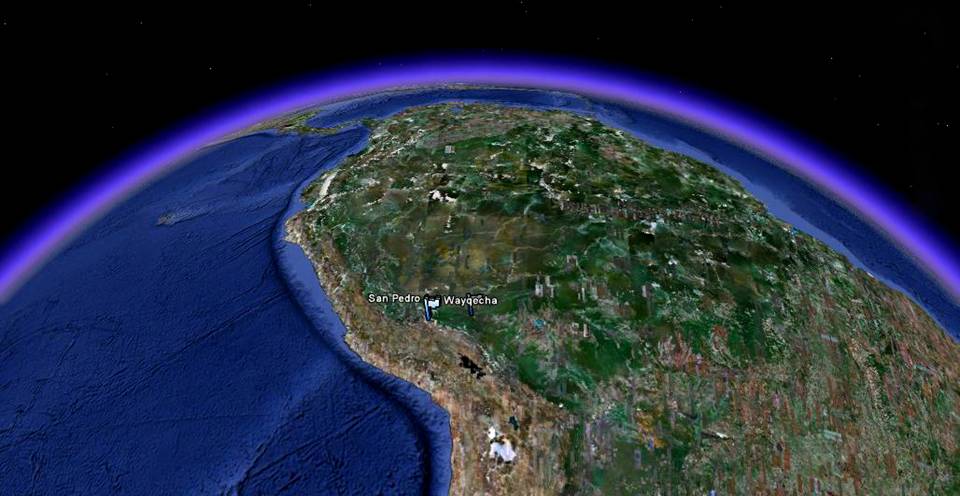
I work in the Andes Mountains in Peru, from the high elevation cloud forests to the lowland Amazon rain forests. The field work is tough, but the land is amazing. I first went to Peru in April 2007, followed up by another trip in October 2007, and again in July 2008. The photographs are divided into 6 sections—the journey to the sites, and the 5 field sites that I’ve worked at: Wayqecha (cloud forest), San Pedro (cloud transition), The Trocha Union, Tono (Andes lowlands/Amazon foothills) and Tambopata (Amazon). Thanks to Yadvinder, Su-Yin, Katja, Cecile, Jose, and Kate for contributing photos.

3 PHOTOGRAPH SUMMARY:

There are 3 words to describe my work in the Andes:

1) Derrumbe (landslide)


2) Mujado (wet)


3) Poder (to be able)


THE JOURNEY TO THE SITES


If life is seen on a movie screen, then the Andes can only be seen on the IMAX. When you see a regular mountain, it rises above the plain with its peak cutting into the sky. But, the Andes are different. If you hold your hand out in front of you pointing straight up and you look at the back of your hand in profile, that's what the Andes look like. They rise into the clouds so you cannot see them in whole.


The Andes were created tectonically, but remain striking and jagged due to lack of weathering on the west side by a rain shadow (all the rain is on the eastern Amazon side, and they somehow manage to have some agriculture on these steep slopes). The Andes take up your entire view--you can't see the top, bottom nor the sides.


When you drive along the face, you dare not look down because you'd have to get over the edge to see the bottom.


On the way up to our first field site, we saw these by the side of the road.


Apparently, they are burial tombs designed to give the dead a nice view of the valley.


Cecile checks in to her 1 bedroom studio apartment.


They even have a jacuzzi.  I later found out that this was a pig sty.


The nearest town to our first site is Paucartambo.


Cecile and I are waaay happier than Katja and Viki.


Just after Paucartambo, on our first visit, we were stopped on the road by a derrumbe. This was not to be our last. The main road, which was unstable, collapsed onto the bottom road below.


The bulldozer that was clearing it out almost went off the cliff so we had to wait a few hours while they frantically dug it out.


We found beer to pass the time.


And watched the kids run around and play with their toys.

They finally cleared the derrumbe by nightfall, but the road wasn't suitable for passing. We decided to go for it anyway, which, in hindsight, was incredibly stupid. Our driver requested that we remain in the vehicle to weigh it down, rather than walk behind it across the derrumbe. As we crawled slowly in the darkness over the rubble, we hit the last remaining pile that had yet to be cleared. Our van tipped 30 degrees so that we could see the bottom of the Andes miles below us. Instinctively, we pressed against the opposite side of the van and we were able to (poder) make it across safely with our hearts racing.


In July 2008, we were stopped by something else. We passed through Paucartambo on the Dia de Carmen, which is the festival of the town’s patron saint.


I really wanted to buy one of these masks, sneak up on Luiz in the middle of the jungle and scare the living bajeezus out of him.


In July ’08 I brought my masters student Su-Yin.


Under the bridge downtown.


Another cool Paucartambo bridge.


We bought our spoons, which Su-Yin felt the need to take a picture of, and got out of there.


WAYQECHA


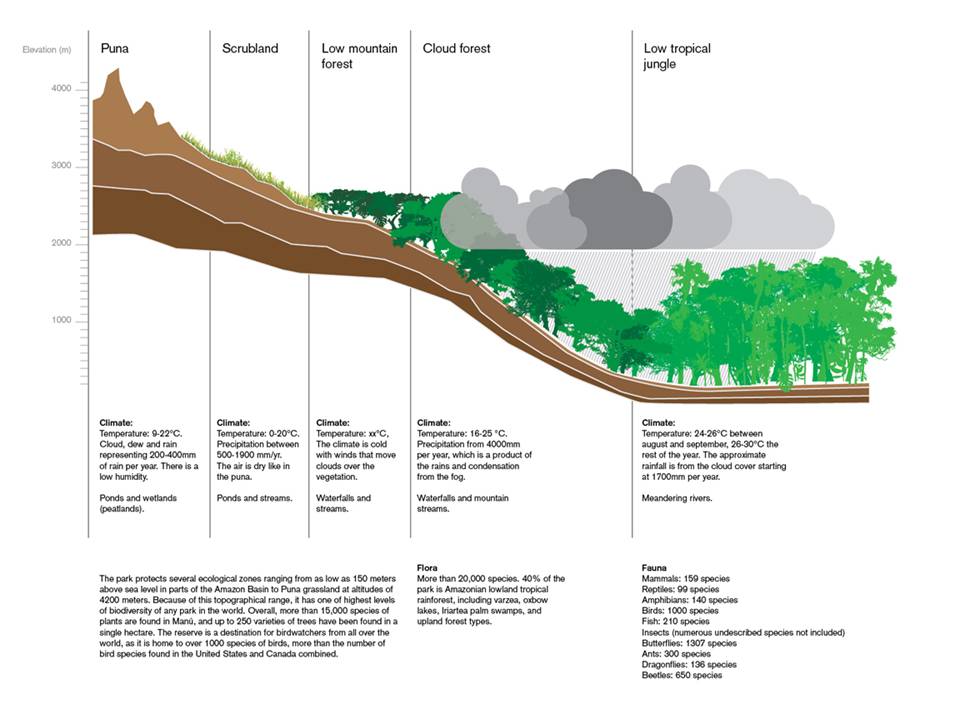
Wayqecha field station is situated 2900 m in the clouds.


We study the cloud-forest that is dependent on these unusual moisture dynamics.


This explains everything.


The field station itself is wonderful--hot water, toilets, beds and even a gourmet chef who baked me a chocolate cake for my birthday!


Our dining hall / laboratory.


And Olympic ping pong training ground.


Ken was building a greenhouse in July ’08.


Our view is like nothing else.


Our view is the Andean valley that looks out onto the Amazon in the distance.


Here I have Su-Yin take a photo of the valley every 15 minutes all day long.


Alfonso, Israel and I go to work in the field…with a bottle of beer?


Cloud watcher.


At night, we can see the cloud electrical field dancing around us. When lightning forms, the thunder is so deafening that it shakes everything. The ultimate sub-woofer if you will.


Other nights, the sky is perfectly clear.


Our field site is a beautiful 45 minute walk over waterfalls…


…around the face of the Andes


…and into the slanted cloud forest. The work is difficult especially traversing across tough topography--I literally hang on to the side of the Andes by swinging from trees and lianas.


Yadvinder looks down at his notebook while Norma looks up to the canopy.


Some of our soil and leaf measurements.


I include this picture from Cuzco before our field work, because this may be the last time we saw Luiz’s and Yadvinder’s hands clean.


Hands are clean no more.


Helping Israel put the loot into the bags near lucky tree #8, which has on it lianas with giant nodules full of yummy nitrogen.


An instrument attached to our weather station (left) and the essentials (right): our super heavy-duty field laptop, satellite phone, pocket knife, and field notebook.


Our team measured everything from up in the sky to down in the roots.


Our gadgets range from inexpensive to expensive.


Our experiment is neatly lined with blue tape.


Group photo (clockwise from left): Our driver Eric, our tree climber Roger (El Trepedor), Josh (Dr Josh), Fernando (Fernandino), Jose, Norma, Katja, Javier (Dendrometerer Extraordinaire), Yadvinder (El Jefe), Luiz (Luizao), and our chef Panchito who, sadly, couldn’t come with us to our other field sites.


Eric is a great driver, unlike Alfonso who lost control of his car, almost drove us off the face of the mountains, then regained traction only to have us slam into the cliff. If you are reading this and are a university official or parent, then, uh, just kidding.


Katja, who stayed behind at Wayqecha, says goodbye to Luiz and Josh.


Oh wait, Luiz is still finishing his cigarette on his precious chair by a bottle of whiskey.


SAN PEDRO


Our field site at San Pedro was difficult to get to. Basically, you walk along the road for a while, crossing beautiful waterfall outlets and the remnants of past derrumbes. Suddenly, you come to a stop at one of the waterfall outlets. "It is here," says one of the Peruvian student helpers. Confused, I follow him as he walks INTO the waterfall. We climb up it for a grueling 25 minutes until we finally come to a path that takes us up to the forest plot. 


Entrance to the plot—much drier at the end of the dry season.


Hiking up the temporarily dry waterfall.


Working again on steep slopes.


Alfonso checks out the leaves above.


Here is our fearless tree climber, Sven, who climbs up enormously tall and unstable trees to collect the leaves for us.  He uses only a rope (no cleats, no special belt, nothing else).


Sometimes the monkeys swing over, curious, to check out our tree climber.  “Is he one of us?” asks the monkey, “Because he looks kind of funny!”


During my 2nd visit a group of 7 very territorial monkeys attacked us.


They lunged from tree to tree, screeched and shook branches violently. But they’re so cute!  I took photos in between dodging sticks that were thrown at us.


I fired my tree climber and hired this guy instead.


This guy applied for the job, but was a bit pudgy.


What are you lookin’ at!


Also up in the trees is a bird foraging for berries.


Su-Yin is thrilled with her daily lunch of bread and week-old unrefrigerated cheese.


Emerging fruit.


The butterflies like to lick the salt off your skin.


Translucent butterfly by the side of the road.


Leaf bug.


In April ’07 we stayed at the house of a trout farmer, Don Dimitrio.


Another make-shift lab.


Dimitrio’s hidden beer and Coke (soda) cellar.


Here, I cook up some fresh trout by candlelight.


A well-deserved meal at the end of a hard day.


Last of the whiskey!


In October ’07 during a rain delay, everyone was bored and listless, so I made a ball out of string and tape, mounted an old tire to the wall (barely seen above the window), and taught the Peruvians how to play mini-hoop basketball, which they loved. After I kicked their butts, we set up a ground goal for mini-futbol, in which they kicked my butt.


Rain outside.


Listo and listless, waiting for the rain to stop.


More rain!


Finally starting to clear.


In July ’08 we camped on this platform near to our site.


Working on my harmonica.


We saw Kate Halladay, who is a graduate student in our lab. Kate releases these balloons every day to measure the vertical profile of the atmosphere.


More derrumbes in April ‘07. At this time there were 5 derrumbes between San Pedro and Wayqecha. One of them was breathtakingly enormous. An entire mountain peak gave way and was now a valley.


One derrumbe, which was stopping supplies (and tourists) from migrating, I had to hike over for 40 minutes. When I got to the other side, I was able to hitch a ride on the back of a tomato truck along with 30 other people. As we set out in the truck, the people around me began crossing themselves, asking for the Lord to take their soul if they should die.


Watching over the mountains.


THE TROCHA

...or, "A Little Taste of Hell" as I found it.


At the top of The Trocha.


Is this Heaven above Hell?


Looking down from above.


“The” house at Tres Cruces.


Our group before we hit The Trocha, which actually was an old Inca trail to the primary Inca agricultural center. Now, it's used by ecologists like us, hard-core tourist backpackers, and coca leaf smugglers.


Actually, it wasn´t so bad at first. We did the first 16 km to our plat in record time. What normally takes 3 hours we did in 1.5 by maintaining a hurried pace over the rough terrain. Our speed was instinctive--shortly after we arrived and set up camp, it started to rain. The rain finally broke with a couple hours of sunlight left and we were able to get some work done.

We made dinner and called it an early night at 8 pm. That night a torrential downpour hit. And it continued all morning so that our campsite began to flood. We dug out a rather primitive but extensive canal drainage system and spent the afternoon beneath a tarp anxiously watching the successfully drainage system. The rain broke in the afternoon again with a few hours of daylight left. We hurriedly did our work, not wanting to spend another day in The Trocha. We used up most of the rest of our food for dinner and hit the sack.


Our slumber was interrupted in the middle of the night be an attack on our campsite by a pair of Osos--bears endemic to the area. We cautiously emerged from our tents, unsure if we were being visited by some aggressive squirrels, large cats, or the legendary "Chuyanchakee" known to haunt The Trocha. The Osos ran off before we were able to get a decent look, but the evidence was in their footprints and the large bite they took out of one of our food storage containers, plus pots and things knocked over.


THE “TASTE OF HELL” (NO PHOTOS ALLOWED IN HELL SO USE YOUR IMAGINATION):

The next day we packed up camp and prepared to go our separate ways--the rest of the Oxford crew back up The Trocha and me with the Peruvian student helpers down The Trocha to set up more plots at another site lower in elevation. However, the Oxford crew needed some help carrying stuff up so two of the Peruvian helpers followed them back up. By the time they returned to Plot 4, where we were, it was 5 pm with little daylight remaining. We loaded up our stuff and set out. And this is where Hell begins.

The first hour down--and last hour of daylight--was interesting. We made our way up and down through an excavated tunnel system beneath the forest amongst the giant tree roots. Feeling good about our pace, we hoped to be down The Trocha in a couple more hours, plenty of time to meet our connecting car at The Mirador by 7:30 pm. The next 6 hours of trekking did not go as planned, however. Night fell and The Trocha got treacherous. The tunnels got old fast as they became smaller and smaller so that we were forced to crawl on our hands and knees with our 50 lb. packs of equipment, tents and clothes continually catching on the sharp coarse-woody roots protruding from the sky. The ground itself was a mixture of hard slippery rocks and thick swallowing mud. The space in front of us was thick vegetation and sharp branches that cut us up and jabbed us in the eyes and head. In fact it was so bad that we took comfort going through the mud swamps because the mud was soft on our aching feet and we knew we couldn’t hurt ourselves by slipping and falling on a rock. So yeah, it was bad. But it gets worse. There had been a mix up in the water situation and it turned out we had none except for one bottle I was carrying, which we went through quickly. We also had no food as we had intended to leave in the morning, not at 5 pm. So that was the situation. And we had little hope of getting out of there safely because The Trocha forked a few times and we weren’t sure if we had missed the right turns in the dark. Oh, and we were following Oso tracks.

Miraculously we made it down The Trocha after 5 hours. But our driver wasn’t there since it was 10 pm. We slumped down at The Mirador, despondent, severely dehydrated, hungry, tired and sore. We yelled and whistled, hoping our noises would carry through the valley, but to no avail. Left with no other choice, we gathered up our stuff for the 2 hour walk to San Pedro. We soon encountered a waterfall to our joy and we drank eagerly for a while.


We continued down the road in a zombie-like state, only to be startled by a deadly snake in the middle of the road.

After we scared it off, we lost each other in the dark in our dazed state. Eventually one of the Peruvians caught up to me and we took a break in the middle of the road. However, we both fell asleep lying in the road, but I was awoken by his snoring. I woke him up with an unenthusiastic, "Vamos," and we continued on. Meanwhile, the other two Peruvians had reached San Pedro, found our driver and sent him up the road to fetch us. We reached San Pedro, scarffed down our food supplies there--namely cookies, coke and oranges--laid out our sleeping bags and fell asleep, completely drained.


We decided to take the day off the next day where we laid out in the sun, soaked our feet in the waterfall and listened to music in our truck. Even though The Trocha was hellish, there are two things I can be thankful for. One, it didn’t rain on us. And two, the temperature wasn’t too bad.


TONO


Tono is situated at the transition between the Andes Mountains and the Amazon.


We always stop in Patria, which is a small town about 1-2 hours out of Tono to load up on supplies and attempt to get a bit of internet. Patria, which is where most of the coca leaves are dried, is part of the cocaine production line, but too much in the middle of nowhere that the Peruvian government doesn’t do anything to stop it. Instead, the government took Patria off the map.


Gas station.


Sometimes we see things that make us think of home.


A hearty meal of whatever they were serving that night.


Just down the road about 20 minutes is another, slightly larger town called Pilcopata. We had to stay here in July ’08 because Patria was drunk from Dia de Carmen. Yeah that’s right, the whole town was drunk.


Loading up before we get going to Tono.


Blasting Reggaeton, we speed off through the Amazon for the hour drive to Tono. Along the road were hundreds of butterflies that scattered as we approached, causing the sky to change brilliant colors. Cruising along nicely to the thump of the bass, we came to an abrupt stop as a river cut straight through the road. We cranked it into 4-wheel drive, hit the gas and went into the river to cross it. We passed about 10 rivers like this until we got to the drop-off point.


A quick stop for a permit check and a game of tetherball—in Peru they call the game (translated) “Smack My Bitch Up”.


Amused at these so-called important Oxford researchers coming in and acting like children.


A stop for a bite to eat of some fresh fruit.


Loading up at the drop off point.


The hike in to the site is about 1.5-2 hours through dense bamboo, thick mud and over rivers.


The site itself is a pleasure to work at--flat and relatively open. But the mosquitoes are like a continuous dust storm and the chiggers (microscopic spiders that eat their way across your torso at night) are the worst. In July ’08 I was determined not to get eaten alive by chiggers yet again, and I diligently applied deet and sulfur powder, which amazingly worked very well!


Oops, missed a spot.


Su-Yin models her mosquito protection while I hide from the mosquitoes behind this twig.


Our campsite by the river.


Our crew bumped into Steven and his crew during our second night at Tono in July ’08.


A few more monkeys check out our work.


Israel-Cuba Torres, who works with me on the fertilisation experiment, was working in Tono in January 2008 in the middle of the rain in the swampiest part of our plots.  He was hacking his way through the jungle with his machete when he cracked through the middle of a fallen bamboo only to discover The Shushupe directly behind it, and not too happy.  The Shushupe went into full attack mode--straightening up, flaring out, and hissing/rattling.  Israel froze to watch his life flash before his eyes before carefully retreating.  He grabbed his camera and, insane as he is, returned to snap a photo in the pouring rain.  The flash startled The Shushupe and both it and Israel ran off in opposite directions, never to see each other again...

From Wikipedia (http://en.wikipedia.org/wiki/Lachesis_(genus)):
The Shushupe, also called The Bushmaster, is of the genus Lachesis of venomous pitvipers found in the remote, forested areas of Central and South America. Lachesis refers to one of the Three Fates in Greek mythology—Lachesis determined the length of the thread of life.

Adults vary in length from 2 to 2.5 m (6.5 to 8.25 ft), and some may grow to as much as 3 m (10 ft). The largest known was 3.65 m (12 ft), making it the longest venomous snake in the Western Hemisphere. It is one of the largest and most dangerous snakes in South America, capable of multiple bite strikes and injecting large amounts of venom—even the bite of a juvenile can be fatal.


Our crew (me, Israel, Su-Yin and Alfonso) met up with Luiz’s crew (Luiz, Dan, Angela) for a night in Tono. We had a bottle of whiskey that was to last us for the week. They had a bottle of rum to the last the same. Both were gone in the matter of a few hours. I blame it on the shushupe—all that was left at the end was the spit of the shushupe (esputa de shushupe).


Kissy kissy!


This deadly snake tried to attack us (but didn't succeed) on our way out of Tono in April ’07 (not my photo, but same type of snake).


Taking a little rest at the halfway point.


Alfonso with a pretty treasure.


We left messages in the sand for Steven et al.


Su-Yin does her karate kid impression.


We wanted her to do the karate kid on this rock, but she demanded that Israel hold her up.


Woohoo, 3 Kings!


Yeah we feel tough.


Okay that’s enough of that.


Back down and out of Tono.


In April ’07, we were stuck behind this derrumbe coming up from Tono. We had to sleep in the car at the base of the derrumbe, but soon after sunrise the road workers began to fix the carraterra.


Bringing in strong dirt and pushing out weak dirt.


The road was finally clear, much to our driver's joy as he had been stuck below the derrumbe site all week. However, we encountered the Edinburgh group, who needed a lift to Tono so our driver had to turn around while the Peruvian students and I loaded ourselves onto the back of a yucca truck and headed to the paradise of Wayqecha.


TAMBOPATA

Our lowest elevation site off the Tambopata River in the Amazon is a pleasure to work at.  We stay at an actual tourist EcoLodge with tourists, there is a bar and good meals.  It is a biodiversity hotspot and the birds sing beautiful music all day and night.


On the boat ride into the Amazon.


Taking the boat in is way nicer than hiking with 50 kilos of stuff on your back through the Andes.


Beautiful birds with black beaks and bodies bathe by the beach.


Fire tree.


Israel, me, Sven and Filio at Explorer’s Inn.


Common flowers around these parts.


This is Wawee, who likes to hang out.


Michael works along side her.


She even eats breakfast with us.


And helped the goalkeeper in football.


A gang rival.


More bird.


Cool leaf cutter ants look like wind surfers.


I accidentally pressed my arm into the tree on the right, which is covered in caterpillars who were not pleased about this intrusion.  My arm suffered the consequences.


Ew squishy bug.


Squishy bug for lunch.


A dendrometer measures the growth of this giant tree.


Spider on the trunk.


Close-up.  Yikes!


I think I’ll grow this direction, no wait I think I’ll grow in that direction, no wait I think I’ll grow in this other direction…